

Hi everyone, William Adams here with insights into the weather and environmental patterns we live with in Long Beach. Understanding local climate trends helps us plan, adapt, and stay healthy. Below is a look at current and ongoing forces shaping our skies and seasons.
Climate Snapshot: What We’ve Got
Long Beach’s climate sits between two categories: hot-semi-arid and hot-summer Mediterranean. We enjoy mild winters, warm to hot summers, and most of our rain comes in winter months. Coastal influence from the Pacific moderates extremes, so even during summer highs, mornings are often cool and crisp.
Temperatures
Our warmest month is typically August, with average highs near 81-82°F and lows in the mid-60s. Winters are mild, with January bringing lows around 47-48°F and highs in the upper 60s. We rarely hit freezing or suffer record heat for long.
Rainfall Patterns
Annual precipitation is modest—around 12 inches per year—and almost all of it falls from November through March. Spring and fall have spotty rain, and summer is nearly dry. Long Beach also sees the kind of variability where rainy winters can alternate with drier ones.
Marine Layer & Coastal Clouds
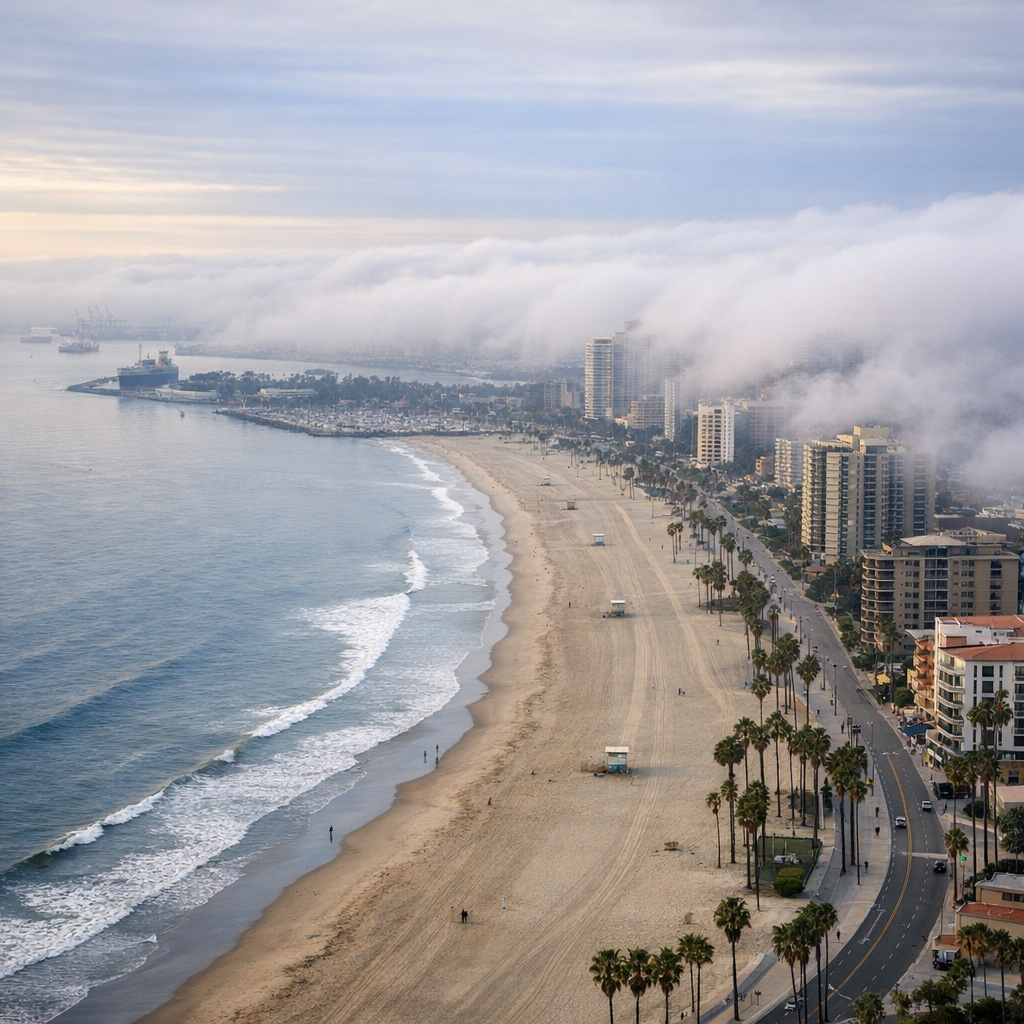
One feature many locals will recognize: morning low clouds and fog, often called the marine layer or “May Gray”/“June Gloom.” These are caused by cool ocean water, moist air, and a temperature inversion acting like a lid over the lower atmosphere. In the early AM the sky is gray and skies clear by midday as the sun heats land and sea breeze kicks in.
Shifting Trends: Warming & Dimming Rain?
Climate studies show a slow but consistent rise in average temperatures here—warming by about 0.17°C per decade over recent decades. Minimum temperatures are climbing faster than highs, which means nights are warming noticeably.
On the rainfall side, there’s evidence our annual totals have slightly declined, particularly during traditionally wetter months. Winter storms are still the bulk of moisture, but there’s more variability—less predictability from year to year.
Air Quality & Environmental Health Concerns
Long Beach faces ongoing air quality challenges—some linked to port activities, shipping, and industrial emissions. For example, methyl bromide (used in fumigation) has been detected at higher levels than background in West Long Beach during spring months near fumigation sites.
Another concern: strange odors along the coastline. Residents have reported gas, sulfur‐type smells originating near the shoreline. Regulators are investigating several possible sources, but the intermittent nature makes it difficult to pin down one culprit.
What You Can Do
- Check forecasts early: expect marine layer mornings and plan outdoor physical activity accordingly—afternoons are usually better.
- On warmer nights, make sure sleeping spaces are well ventilated to manage rising minimum temperatures.
- During winter, retain water wisely—use local reservoir or catchment resource info since rain patterns are changing.
- If you notice odors or suspect air pollution, report them to agencies like South Coast AQMD to help improve monitoring and response.
- Planting native, drought-tolerant species reduces outdoor water use and helps urban cooling—good for both environment and your yard.
Looking Ahead
Long Beach’s weather doesn’t come with wild swings, but the shifts are enough to make an impact—warmer nights, variable rain, the marine layer’s persistence. These trends call for attention: from local planning to backyard gardening. As always, paying attention to forecasts, local advisories, and environmental alerts will keep us prepared and resilient.
— William Adams